Freemasonry has never been about accumulating wealth.
The ritual makes that clear from the start. But throughout history, some extraordinarily wealthy men have been Freemasons.
Not because the Craft made them rich, but because successful people from all walks of life have been drawn to its principles.
Here’s the fascinating part: several of the wealthiest Americans in history were confirmed Freemasons.
Their Masonic membership is documented, their lodge affiliations recorded, their participation verified. These weren’t just rich men who happened to join.
Many were active participants who took the Craft seriously despite their enormous wealth and demands on their time.
Let me be clear upfront. This article focuses on confirmed, documented Freemasons. You’ll find plenty of lists online claiming every billionaire from the Rockefellers to Bill Gates is a Mason.
Most of those claims are unverified rumors or outright conspiracy theories. I’m sticking to the men whose Masonic membership is actually documented.
Freemasons Community: Join thousands of Masons from around the world in a private, active community built for the Craft.
Masonic Lodge Secretary: Stop drowning in paperwork. Manage your entire Lodge from one simple, purpose-built tool.
MasonicFind Newsletter: The weekly read for serious Masons. Insights, ideas and resources delivered straight to your inbox.
1. John Jacob Astor (Adjusted Net Worth: $121 Billion)
The richest confirmed Freemason in history was John Jacob Astor, America’s first multi-millionaire.
Born in Germany in 1763, Astor immigrated to America after the Revolutionary War with almost nothing. He started in the fur trade, built a monopoly, then pivoted to New York real estate at exactly the right time. When he died in 1848, his estate was worth between $20 and $30 million, which represented roughly 1% of the entire U.S. GDP at the time.
Adjusted for inflation and GDP growth, that’s equivalent to approximately $121 billion today, making him one of the richest people in human history.
Astor wasn’t just nominally a Freemason. He was raised in Holland Lodge No. 8 in New York City and served as its Master in 1788. Later, he served as Grand Treasurer for the Grand Lodge of New York.
He remained active in Freemasonry throughout his life despite his massive business empire.
His great-grandson, John Jacob Astor IV, was also a Freemason and one of the wealthiest men in the world when he died on the Titanic in 1912. At the time of his death, Astor IV’s net worth was approximately $87 million (roughly $2.9 billion today). He perished as the richest passenger on the ship.
The Astor family’s connection to Freemasonry spanned generations, and their wealth, rooted in fur trading and New York real estate, helped shape American commerce.
2. Henry Ford (Adjusted Net Worth: $200 Billion)
Henry Ford wasn’t just rich. He was one of the wealthiest human beings who ever lived.
At his peak in the 1920s, Ford controlled an estimated $1.2 billion in personal wealth. When adjusted for inflation, that translates to approximately $200 billion in today’s dollars. Some estimates place him even higher, potentially making him the second-richest American in history after John D. Rockefeller.
Ford was raised to Master Mason in Palestine Lodge No. 357 in Detroit on November 28, 1894. He remained an active Freemason for 53 years until his death in 1947.
He achieved the 33rd degree of the Scottish Rite in 1940 and reportedly said, “Masonry is the best balance wheel the United States has.”
What’s remarkable about Ford wasn’t just his wealth, but how he accumulated it. He revolutionized manufacturing with the assembly line, made automobiles affordable for average Americans, and paid his workers unprecedented wages.
His $5-a-day wage in 1914 (when most factory workers earned less than half that) created a middle class that could afford to buy the products they were making.
Ford donated massive amounts to charitable causes throughout his life. Upon his death, he left most of his wealth to the Ford Foundation, which continues philanthropic work today.
His commitment to Freemasonry lasted his entire adult life. He even made several visits to Zion Lodge No. 1, Michigan’s oldest lodge, and was made an honorary member in 1928.
3. J.C. Penney (Net Worth: Difficult to Precisely Calculate)
James Cash Penney built one of America’s largest retail empires and was a dedicated Freemason throughout his life.
Born in 1875, Penney started with almost nothing. He worked as a sales clerk, then invested $500 to become a one-third partner in a dry goods store in Kemmerer, Wyoming in 1902. By 1912, he had expanded to 34 stores. By 1929, he operated 1,400 stores.
The Great Depression nearly ruined him financially, but he rebuilt. At his peak, Penney’s wealth was substantial, though precise figures are hard to pin down since much of it was tied up in company stock that fluctuated dramatically.
Penney was raised in Wasatch Lodge No. 1 in Salt Lake City, Utah on April 18, 1911. He was a member of both the Scottish and York Rites and was coroneted a 33rd Degree Mason on October 16, 1945.
One interesting anecdote: in 1940, while visiting a Des Moines, Iowa store, Penney encountered a young employee named Sam Walton (who would later found Walmart) and taught him how to wrap packages properly.
This interaction between two retail titans is now legendary in business history.
Penney remained active in Freemasonry and philanthropy until his death in 1971. His foundation continues charitable work today.
4. Walter Chrysler (Net Worth: Several Hundred Million)
Walter Chrysler built the automotive empire that bears his name and was a confirmed Freemason.
Born in 1875, Chrysler worked his way up from railroad mechanic to one of America’s automotive giants. He founded Chrysler Corporation in 1925, which became one of the “Big Three” American automakers alongside Ford and General Motors.
At his death in 1940, Chrysler’s fortune was estimated at several hundred million dollars, though exact figures vary. Adjusted for inflation, this would be several billion today.
Chrysler was a 32nd Degree Scottish Rite Mason, raised in Salina, Kansas.
He was a member of the Isis Shrine Temple at Salina and reportedly visited various lodges throughout his career, including Cedar Lodge No. 270 in Oshawa, Ontario, while employed by Buick Corporation.
5. Colonel Harland Sanders (Modest Wealth, But Confirmed Mason)
While not in the same wealth category as the others on this list, Colonel Sanders of Kentucky Fried Chicken fame deserves mention as a confirmed Freemason who built a recognizable brand.
Sanders sold his KFC corporation in 1964 for $2 million (about $20 million today) and took a salary to remain as brand ambassador. While not extraordinarily wealthy by billionaire standards, his success story and his Masonic membership are both well-documented.
His rise from poverty to building a global franchise while maintaining Masonic principles makes him notable among wealthy Freemasons.
6. Dave Thomas (Net Worth: $2+ Billion at Death)
Dave Thomas, founder of Wendy’s restaurants, was confirmed to be a Freemason, raised in Sol. D. Bayless Lodge No. 359 in Fort Wayne, Indiana.
Thomas was adopted as a child and dropped out of high school to work in restaurants. He eventually founded Wendy’s in 1969, which grew into one of America’s largest fast-food chains.
At his death in 2002, his net worth was estimated at over $2 billion.
Thomas was known for his philanthropy, particularly supporting adoption causes. His Masonic membership, while not as publicly discussed as his business success, is documented in Masonic records.
7. Steve Wozniak (Current Net Worth: ~$100 Million)
One of the few modern tech entrepreneurs with confirmed Masonic membership is Steve Wozniak, co-founder of Apple Computer.
Wozniak was raised in Charity Lodge No. 362 in Campbell, California. While his net worth of approximately $100 million is modest compared to his Apple co-founder Steve Jobs (who was not a Freemason), Wozniak represents a rare confirmed tech billionaire Mason.
His membership is particularly interesting because tech entrepreneurs are rarely connected to traditional fraternal organizations.
The Ones That Weren’t (Probably)
Before we continue, let’s address the elephant in the room. Many lists online claim the following billionaires are Freemasons:
John D. Rockefeller: No confirmed evidence. The Rockefeller Archive Center’s biography lists his many philanthropic activities but no Masonic involvement.
Andrew Carnegie: No confirmed evidence despite frequent claims.
Cornelius Vanderbilt: Frequent claims, but no documented lodge membership I could verify.
Bill Gates: Completely unsubstantiated rumors.
Warren Buffett: No evidence.
The Rothschild family: While some Rothschilds have been confirmed Masons (James Mayer Rothschild and Nathan Mayer Rothschild were initiated in Emulation Lodge No. 12, London), claims about all family members are exaggerated.
The problem with conspiracy theories is that they attribute Freemasonry to every wealthy or powerful person without bothering with actual evidence.
Documented Masonic membership requires records: lodge name, dates of initiation, passing, and raising. Without these, it’s just speculation.
Other Wealthy Confirmed Freemasons
Several other business leaders had confirmed Masonic membership, though their exact wealth is harder to calculate:
André Citroën – French automotive pioneer who founded Citroën. Member of Lodge La Philosophie Positive, Paris.
Samuel Colt – Firearms manufacturer. Member of St. John’s Lodge, Hartford, Connecticut. His invention of the revolver made him extraordinarily wealthy for his era.
Charles Hilton – Founder of Hilton Hotels. Member of William B. Warren Lodge No. 309, Illinois.
King C. Gillette – Founder of Gillette Razor Company. His invention of the safety razor made him a multi-millionaire in the early 1900s.
George Pullman – Inventor of the Pullman sleeping car for trains. Member of Renovation Lodge No. 97, Albion, New York. His invention revolutionized train travel and made him extraordinarily wealthy.
David Sarnoff – Broadcasting pioneer known as the “Father of Television.” Member of Strict Observance Lodge No. 94, New York. As the head of RCA, he became one of the most influential media figures of the 20th century.
The Pattern That Emerges
Looking at this list, a pattern emerges. These weren’t men who became wealthy through Masonic connections.
They became wealthy through innovation, hard work, and often being in the right place at the right time.
Many of them joined Freemasonry before they were wealthy. Ford was raised in 1894 when he was still working as an engineer, years before founding Ford Motor Company.
Penney joined in 1911 when he had a handful of stores, not an empire. Astor joined in his 20s while still building his fur business.
They didn’t join to get rich. They joined for the same reasons most men join: seeking fellowship, moral development, and connection to something larger than themselves.
The fact that they remained active Masons after achieving massive wealth is perhaps more telling. Ford maintained his membership for 53 years. Astor served as Grand Treasurer.
Penney achieved the 33rd degree. These weren’t nominal memberships. These were men who found value in Freemasonry throughout their lives.
What About Modern Billionaires?
You’ll notice this list is mostly historical figures. There’s a reason for that.
Modern billionaires rarely publicize their fraternal affiliations. Privacy concerns, security issues, and the decline of fraternal organizations generally mean we simply don’t know about many contemporary members.
Additionally, Freemasonry has declined significantly since its mid-20th century peak. The ultra-wealthy today are more likely to be involved in exclusive business groups, think tanks, or private clubs than traditional fraternal organizations.
That said, Freemasonry still attracts successful professionals, business owners, and leaders. They’re just not usually at the extreme billionaire end of the wealth spectrum.
The Bottom Line on Wealth and Freemasonry
Here’s what the evidence actually shows: Freemasonry doesn’t make you rich.
Several extraordinarily wealthy men throughout history have been Freemasons, but their wealth came from their business acumen, innovations, and often fortunate timing.
What Freemasonry provided these men wasn’t financial advantage. It was fellowship, moral guidance, and connection to principles larger than business success.
The richest confirmed Freemason, John Jacob Astor, accumulated his wealth through the fur trade and real estate, not lodge connections. Henry Ford revolutionized manufacturing. Penney built retail stores. Chrysler made automobiles.
Their Masonic membership was separate from their business lives. Lodges don’t function as business networking organizations. Masonic obligations explicitly prohibit using the lodge for commercial advantage.
What’s remarkable isn’t that these wealthy men were Masons. It’s that they remained active Masons despite their wealth. They could have been members of any exclusive organization.
They chose to continue meeting with Brothers from all walks of life, participating in ritual, and supporting Masonic principles.
That says something about the value they found in Freemasonry that had nothing to do with money.
The lesson here isn’t that Freemasonry leads to wealth. It’s that some of history’s wealthiest men found meaning in an organization that values moral development over material success. In a world obsessed with accumulation, that’s worth noting.
Freemasonry has always taught that true riches aren’t financial. Brotherhood, character, truth, these are the real treasures. The fact that some billionaires agreed with that assessment makes the point more powerfully than any ritual lecture could.
Bonus: The Legendary Wealth of King Solomon
No article about wealthy Freemasons would be complete without acknowledging the elephant in the room: King Solomon himself.
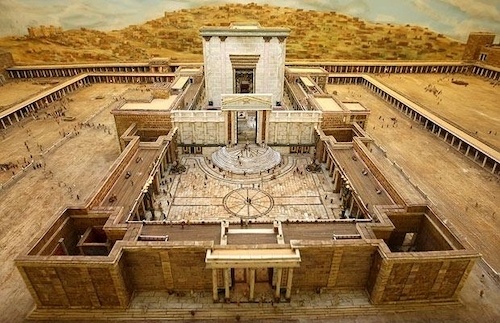
Solomon wasn’t a Freemason. Obviously. Freemasonry as we know it didn’t exist in ancient Israel. But Solomon occupies a unique position in Masonic tradition as the legendary builder of the Temple, the archetypal wise king, and the symbolic Grand Master of the original operative masons.
And according to biblical accounts, he was arguably the wealthiest human being who ever lived.
The Biblical Record
1 Kings 10:14 states that Solomon received 666 talents of gold annually in tribute. A talent weighed approximately 75 pounds. That’s roughly 50,000 pounds of gold per year, or about 25 tons. At today’s gold prices, that single annual tribute would be worth over $1.1 billion.
But that was just one income stream. Solomon also received tribute from kings throughout the known world, controlled lucrative trade routes, operated a merchant fleet in partnership with Hiram of Tyre, and taxed his own people heavily. The biblical text says he made “silver as common in Jerusalem as stones.”
Various estimates place Solomon’s total net worth between $2 trillion and $3 trillion in modern currency. That would make him wealthier than anyone on this list by an order of magnitude. Wealthier than any modern billionaire. Possibly the richest person in human history.
The Source of His Wealth
According to the biblical narrative, Solomon’s wealth came from multiple sources, all enabled by the wisdom God granted him.
He controlled critical trade routes between Africa, Arabia, and Asia. Jerusalem sat at the crossroads of three continents, and Solomon exploited this geography brilliantly. Merchants paid tolls to pass through his territory. He acted as middleman for goods moving between empires.
He formed a partnership with King Hiram of Tyre, providing land access while Hiram provided naval expertise. Their joint merchant fleet sailed to Ophir, returning every three years with gold, silver, ivory, and exotic animals.
He received diplomatic gifts from rulers worldwide who came to hear his legendary wisdom. The Queen of Sheba’s visit is the most famous, bringing “very great quantities of spices, and precious stones, and gold” (1 Kings 10:2). After seeing Solomon’s wealth and wisdom, she gave him additional gifts before leaving.
He also, less admirably, taxed his people heavily and used conscripted labor for his massive building projects. This oppressive taxation would eventually contribute to the kingdom’s division after his death.
The Masonic Connection
So why mention Solomon in an article about Freemasons when he clearly wasn’t one?
Because Solomon represents something essential to Masonic philosophy. He had extraordinary wealth, unmatched wisdom, and absolute power. Yet the biblical narrative is ultimately a cautionary tale about the corruption that comes from accumulation.
Solomon started well. When God offered him anything, he asked for wisdom to govern justly, not wealth or long life. Pleased by this selfless request, God gave him wisdom and also granted him riches and honor beyond any other king.
But over time, Solomon’s accumulation of wealth, wives, and power led him astray. He built temples to foreign gods to please his many wives. He oppressed his own people with heavy taxation and forced labor. His excessive wealth and luxury corrupted what had begun as a righteous reign.
The book of Ecclesiastes, traditionally attributed to Solomon in his later years, is essentially a meditation on the meaninglessness of wealth and achievement without spiritual grounding. “Vanity of vanities, all is vanity” is the cry of someone who had everything material and found it ultimately empty.
The Lesson in the Legend
This is why Solomon matters to Masonic tradition. Not because he was a Freemason, but because he embodies both the potential and the danger of wealth and worldly success.
Freemasonry teaches moral lessons through allegory and symbol. The Temple of Solomon represents the perfection we should aim for in building our character. Solomon himself represents both wisdom and its potential corruption through material excess.
The Working Tools teach us to use our resources wisely, to build something meaningful, to perfect our rough ashlar. But they also warn against making wealth itself the goal. The compasses that circumscribe our desires remind us that even unlimited resources should be used with restraint.
Solomon built the most magnificent temple in the ancient world. But the Masonic lesson isn’t about the physical structure. It’s about building the temple within yourself. And that temple can’t be constructed with gold and cedar. It requires different materials entirely.
The Richest Mason Who Never Was
If we included Solomon in our rankings based on biblical accounts, he would dwarf everyone else combined. His $2+ trillion would make Henry Ford’s $200 billion look modest. John Jacob Astor’s $121 billion would be pocket change.
But he also demonstrates that extraordinary wealth doesn’t guarantee happiness, fulfillment, or even a positive legacy.
Solomon is remembered more for his wisdom than his wealth, and ironically, his wisdom ultimately led him to conclude that the pursuit of wealth is meaningless.
The actual Freemasons on this list, from Astor to Wozniak, seemed to understand this.
They pursued success in their fields, accumulated wealth through innovation and hard work, but found meaning in Freemasonry’s principles rather than their bank accounts.
They could have spent their time exclusively with other wealthy people in exclusive clubs.
Instead, they chose to attend lodge with Brothers from all walks of life, participate in ritual that emphasizes moral development over material success, and support an organization that explicitly teaches the limitations of worldly achievement.
That’s the real lesson from Solomon’s legendary wealth. Having everything doesn’t mean anything unless you’re building something beyond yourself. The Temple matters. The gold that decorates it? That’s just decoration.
The wealthiest man in Masonic tradition teaches us that wealth isn’t what matters. Character, wisdom, brotherhood, moral development, these are the true treasures worth accumulating.
And unlike gold, you get to keep them after you die.
TrestleLog: Finally, a proper way to log your Masonic journey. Track every meeting, degree and milestone in one place.
Great Masonic Library: Unlock 300+ rare and out-of-print Masonic books that most Masons will never get to read.
MasonicMentor.AI: Get instant answers to your Masonic questions, any time. Like having a wise mentor available 24/7.
Masonic Courses: Go deeper than your Lodge can take you. In-depth courses on history, ritual and philosophy at your own pace.
FreemasonryAI: Save hours every month with 150+ AI prompts built specifically for Lodge officers and Masonic education nights.
Masonic Etiquette: Know exactly how to conduct yourself in Lodge. The guide every Mason wishes they had from day one.
Masonic Lessons: The lessons behind the ritual, explained clearly. Deepen your understanding at every degree.
Lodgeman Bundle: Everything a dedicated Mason needs in one bundle. The best value way to invest in your Masonic education.
Masonic Lectures: Classic lectures that have shaped Freemasonry for generations, ready for you to study and deliver.
The Masonic Way: Freemasonry is more than a meeting. Discover how to live its principles every single day.
100 Facts About Freemasonry: Surprising, fascinating and little-known facts about the Craft. Perfect for Masons and curious minds alike.
Become a Freemason: Thinking about joining? This guide walks you through everything you need to know before you knock on the door.