One of my personal favorite crime stores ever has to be the story of Jack The Ripper.
Today, we’re taking a closer look at the allegations that claim Jack the Ripper was a Freemason.
But was Jack The Ripper a Freemason?
While there are legitimate reasons why this acquisition is made (which you’ll hear about below), as you may know already, no one really knows who Jack the Ripper really is, let alone if he was an initiated man or not.

Freemasons Community: Join thousands of Masons from around the world in a private, active community built for the Craft.
Masonic Lodge Secretary: Stop drowning in paperwork. Manage your entire Lodge from one simple, purpose-built tool.
MasonicFind Newsletter: The weekly read for serious Masons. Insights, ideas and resources delivered straight to your inbox.
Who Was Jack The Ripper?
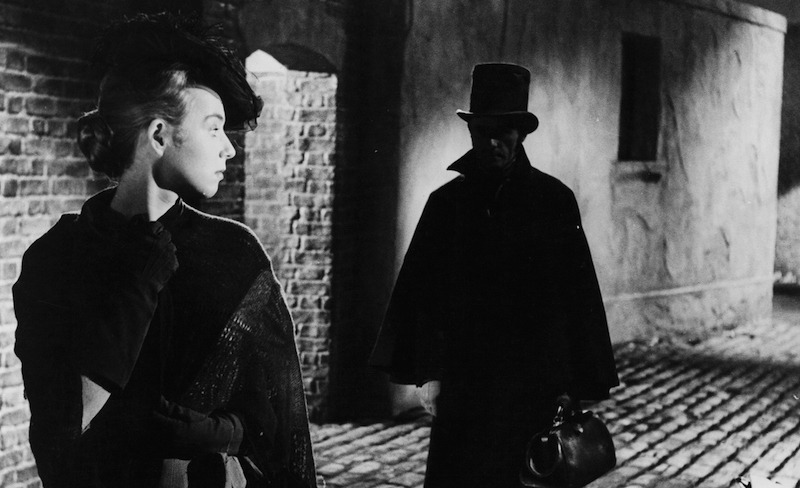
Jack the Ripper was an identified serial killer who murdered five women in London in 1888. His victims were people from impoverished areas within and around the Whitechapel district.
The name ‘Jack The Ripper’ originated from a letter written to media outlets by an unknown individual claiming to be the murderer. The letter dubbed as ‘From Hell’ was received by George Lusk of the Whitechapel Vigilance Committee.
The letter was accompanied by a half kidney preserved in spirits and suspected to belong to Catherine Eddowes, one of the victims whose kidneys were removed from her body. It read:
‘From Hell.
Mr. Lusk,
Sir, I send you half the kidney I took from one woman preserved it for you, the other piece I fried and ate it was very nice. I may send you the bloody knife that took it out if only you wait a while longer.
Signed
Catch me when you can.
Mishter Lusk’
Suspected Ties With Freemasonry
At the time, several other letters were flocking in from different people claiming to be responsible for the killings. The main reason why ‘From Hell’ stands out from the rest is the human kidney delivered together with the letter.
Jack, the Ripper, also known as the Whitechapel Murderer and Leather Apron, was suspected to be a Freemason.
Even though he wasn’t caught and apprehended, evidence garnered from how the murder was undertaken arose a theory of his association with the craft.
Roughly three of his victims had their internal organs removed. Reports from Commissioner Warren, an archeologist trying to determine the historical basis of Freemasonry and worked on the case, hesitated to point the murders in the brotherhood direction.
Jack’s first victim, Mary Ann Nichols, was discovered at approximately 3.40 a.m on 31st August 1888. Her throat had been slashed, her abdomen ripped open, and her intestines were exposed. Her hands lay by the side, and there were no visible marks on her body.
The second victim Annie Chapman was murdered on 8th September 1888. The murder was undertaken in the same manner as the initial one. On 30th September, Catherin Eddowes succumbed to a similar fate.
However, this was slightly different as her face was mutilated and engraved symbols that looked like a pair of compasses, a known Masonic symbol. Commissioner Warren had at the time identified this sign from the stones of Solomon’s Temple.
Her cheeks were slashed, and incisions measuring about a quarter an inch and half an inch respectively had been notched through each eyelid. A triangular cut, the sharp point (apex) pointing to her eye, had been engraved in each cheek.
All the carvings done on the victim’s face are symbols related to Freemasonry.
The triangle in each cheek with its arch facing the eye is identical to the ‘Eye of Providence.’
In Freemasonry, it represents God’s all-seeing eye, which reminds Masons that God is always observing their thoughts and actions.
The killer had torn off her apron and dumped it nearby with a sprawled message that read ‘The Juwes are/ The men that/ Will not/ Be blamed/ for nothing.’
They All Love Jack: Busting the Ripper
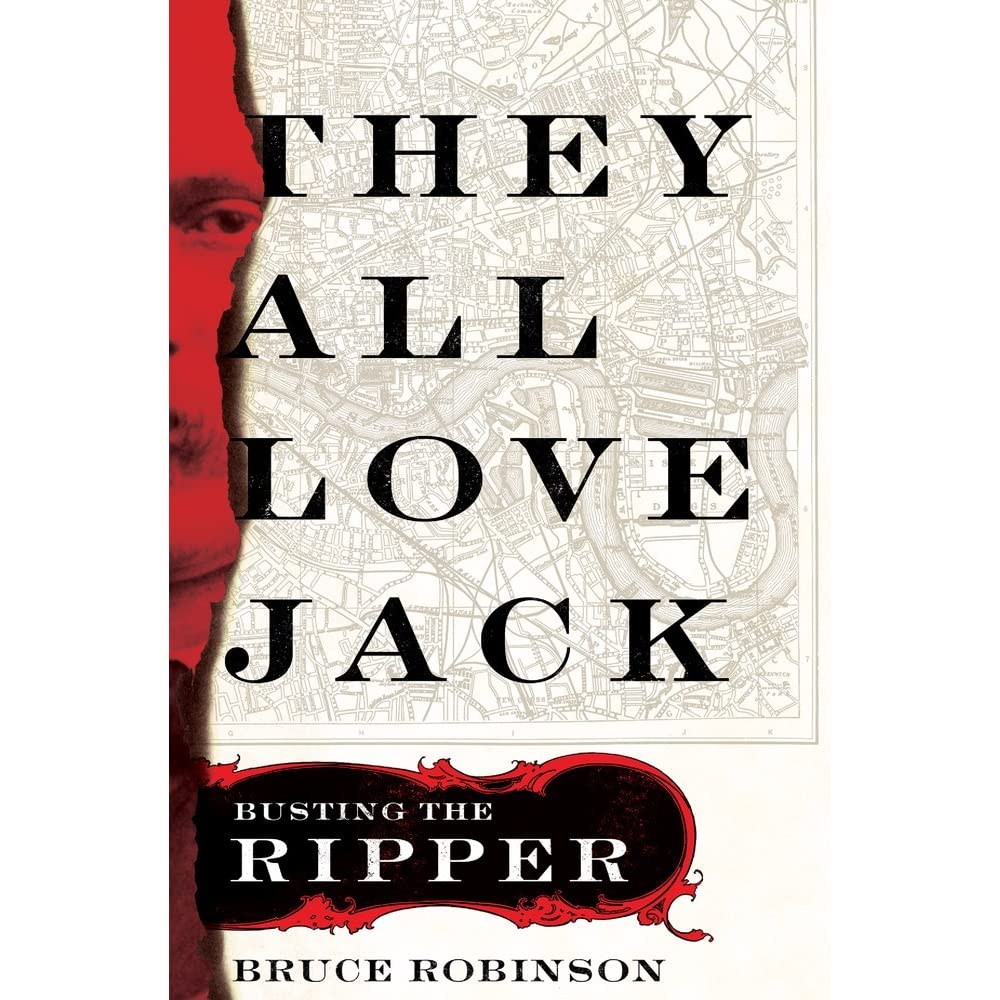
This message was directed to Warren as a part of a mind game played by the killer. In his book ‘They All Love Jack: Busting the Ripper, ‘ author Bruce Robinson termed this a ‘masonic teaser.’
This book is the greatest speculation that links the murder to the Freemasonry.
The word ‘Juwes’ was a childish nickname for Ju(Bela), Ju(Belo), and Ju(Belum), which was an insider Masonic term for Jerusalem Warren.
The commissioner was in shock and ordered the words to be quickly washed off before they were photographed. He feared that the writing would start an anti-semitic riot. This destroyed one of the significant clues the killer had ever left.
Barely two days after Catherine Eddowes murder, a torso of a woman suspected to be Lilly Vass sawn at the pelvis was found. The place of discovery later became Commissioner Warren’s police headquarters.
The simultaneous murder of Annie Chapman and Eddowes is believed to symbolize the execution of Jubela and Jubelo by Robinson.
The torso portrayed the killing of Jubelum, who had been historically condemned by Solomon; ‘taken without the walls of the Temple and there have your body severed in two.’ Also known as the ‘Whitehall mystery.’
Robinson noted that all these tiny bits of details were directed at Warren. The police, later on, denied any association between the torso discovered and Jack the Ripper. The case was closed, and the files coincidentally disappeared.
The author argues that the commissioner was more concerned about covering any tracks that linked the murders to the craft more than arresting the actual killer.
This is because all Masonic allusions recovered from the crime scenes were hastily buried. At the time, the brotherhood was affiliated to the Royal Monarch, and therefore arresting the perpetrator would jeopardize a highly ranked secret society.
The catastrophic aftermath would permanently damage the morals and the status Freemasonry had strived so long to build.
The killer was suspected of going after women who were the root of wrongdoings in society. All the Whitechapel murders were prostitutes.
Freemasonry members believe in a higher power and abide by moral guidance. This is one of the significant reasons that prompted people to assume that the perpetrator was a Mason.
Micheal Maybrick, popularly known by his stage name Stephen Adams, was a famous songwriter in the 1880s and a Freemason. His hit ‘They All Love Jack’ led people to believe that he was Jack the Ripper.
His artistic career allowed him to move to different places in London, therefore, giving him ample time to undertake these murders without arousing any suspicion.
However, historians and legend suggest that Jack the Ripper was from around Whitechapel and had vast anatomical knowledge.
CLICK HERE to see more Masonic myths and conspiracies busted by the truth.
Jack The Ripper Was Not A Freemason
A direct linkage between Jack the Ripper and Freemasonry was never established.
This is mainly due to the fact the actual killer wasn’t found.
All people did is come up with different ideologies based on the evidence recovered on the crime scene in trying to associate the murderer to the Craft.
TrestleLog: Finally, a proper way to log your Masonic journey. Track every meeting, degree and milestone in one place.
Great Masonic Library: Unlock 300+ rare and out-of-print Masonic books that most Masons will never get to read.
MasonicMentor.AI: Get instant answers to your Masonic questions, any time. Like having a wise mentor available 24/7.
Masonic Courses: Go deeper than your Lodge can take you. In-depth courses on history, ritual and philosophy at your own pace.
FreemasonryAI: Save hours every month with 150+ AI prompts built specifically for Lodge officers and Masonic education nights.
Masonic Etiquette: Know exactly how to conduct yourself in Lodge. The guide every Mason wishes they had from day one.
Masonic Lessons: The lessons behind the ritual, explained clearly. Deepen your understanding at every degree.
Lodgeman Bundle: Everything a dedicated Mason needs in one bundle. The best value way to invest in your Masonic education.
Masonic Lectures: Classic lectures that have shaped Freemasonry for generations, ready for you to study and deliver.
The Masonic Way: Freemasonry is more than a meeting. Discover how to live its principles every single day.
100 Facts About Freemasonry: Surprising, fascinating and little-known facts about the Craft. Perfect for Masons and curious minds alike.
Become a Freemason: Thinking about joining? This guide walks you through everything you need to know before you knock on the door.